
A fast, stable and secure foundation for your website
Hosting is the service that stores all the files, images, databases and resources required for a website to be available online.
You can have an attractive design and high-quality content, but if the hosting does not provide good performance, the website may load slowly, experience downtime or suffer from security issues. That is why choosing the right hosting is a fundamental part of any professional web project.
At Lenixas Web Design Studio we help you select, configure and manage hosting tailored to your website’s characteristics, expected traffic and the needs of your company.
What is hosting?
Hosting, also known as web hosting, is the space on a server where the elements that make up a website are stored:
- website files;
- images and videos;
- databases;
- email accounts;
- backups;
- configurations and applications;
- security certificates.
When a user enters your domain in a browser, the server processes the request and displays the website content.
The domain acts as your company’s address on the Internet, while hosting is the place where all the resources needed for the website to function are stored.
Why is it important to choose good hosting?
The quality of hosting directly affects how a website performs. A professional service should provide stability, speed, protection and sufficient resources to respond properly when users visit the site.
Good hosting helps to:
- keep the website available throughout the day;
- reduce loading times;
- protect files and databases;
- handle website traffic correctly;
- create backups;
- use corporate email accounts;
- increase resources as the project grows.
Not every website requires the same capacity. A small corporate website needs a different configuration from an online shop, booking portal or platform with a large number of users.
Speed and performance
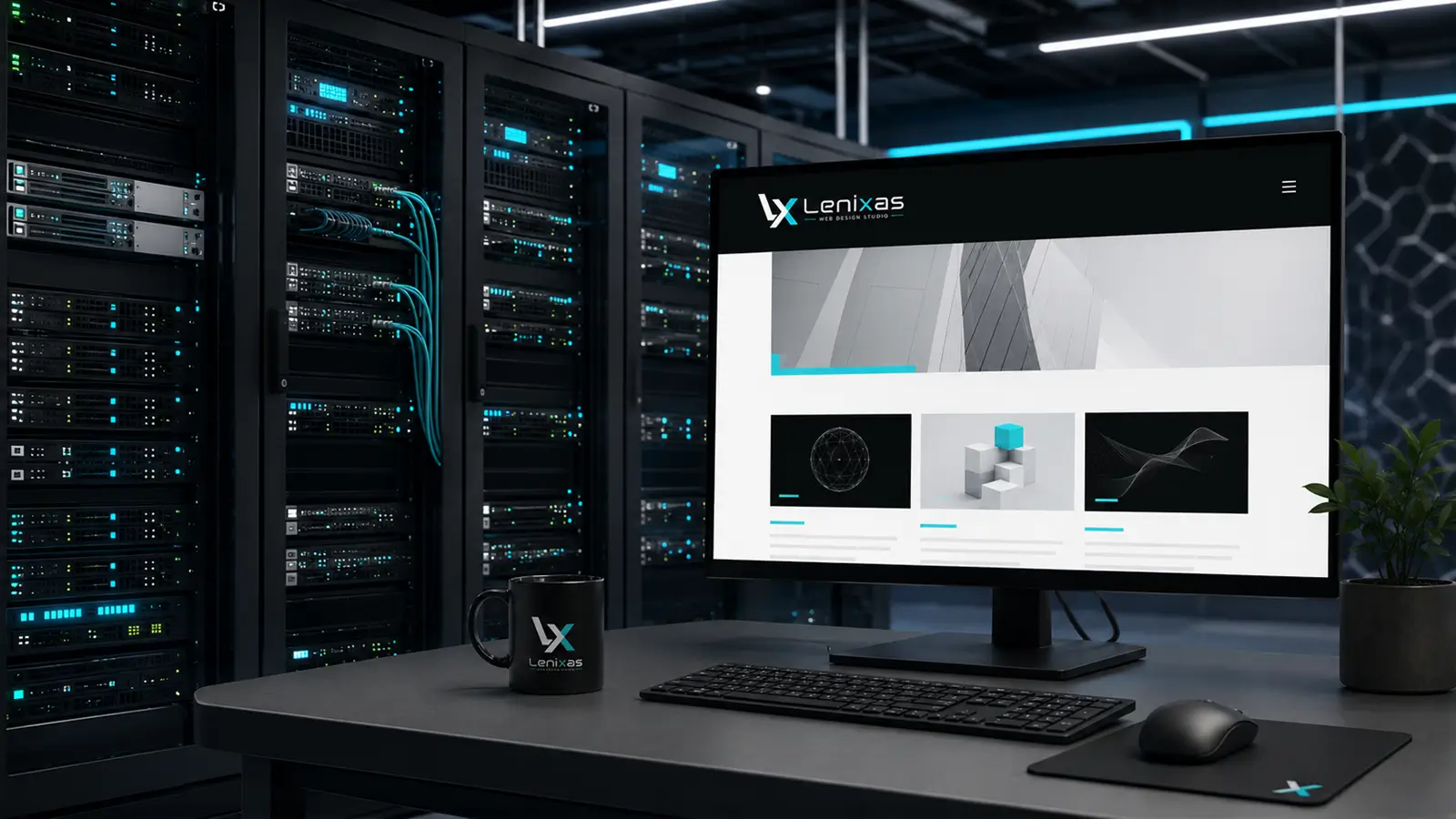
Loading speed is one of the most important aspects of a website. Users expect to access information quickly and may leave a site that takes too long to load.
Performance depends on several factors, including:
- server capacity;
- the location of the data centre;
- the technology used;
- the website configuration;
- the size of the images;
- the number of simultaneous visits;
- the resources allocated to the hosting.
We select solutions that provide an appropriate technical foundation and configure the website so that it makes proper use of the available resources.
Availability and stability
A website must remain accessible to both clients and search engines. Frequent downtime can damage the company’s image, lead to lost enquiries and disrupt important services.
That is why we evaluate providers that offer stable infrastructure, technical monitoring and systems designed to reduce the risk of downtime.
For projects with greater requirements, scalable solutions can also be used, allowing resources to be increased as the number of users or the amount of content grows.
Website and data security
Hosting is an important part of website security. Although no system can guarantee complete protection, professional configuration helps reduce many risks.
Depending on the project, the service may include:
- an SSL certificate;
- protection against unauthorised access;
- security filters;
- server updates;
- regular backups;
- file recovery;
- incident monitoring;
- protection of email accounts.
We also check that the website, content management system and its components are correctly configured and kept up to date.
Backups
Backups make it possible to restore a website after an error, an unsuccessful update, file loss or a technical problem.
A professional backup should include the essential elements of the site, especially the files and database. It is also important to know how frequently backups are created, how long they are retained and how the information can be restored.
Depending on the company’s needs, daily, weekly or additional backups can be configured before major changes are made.
Types of hosting
There are different types of hosting, each offering a different level of performance, control and capacity.
Shared hosting
Several projects share the resources of the same server. It is a suitable option for small corporate websites or projects with a moderate level of traffic.
VPS server
The server is divided into independent virtual environments. It provides more resources, greater flexibility and more configuration options than shared hosting.
Dedicated server
All server resources are allocated to a single project. It is mainly used for websites with advanced technical requirements or high traffic volumes.
Cloud hosting
The website uses the resources of several connected servers. This system makes it possible to adjust capacity more flexibly and reduce dependence on a single machine.
Managed hosting
The provider or technical team handles certain maintenance, security, update and optimisation tasks. It is a convenient solution for companies that prefer to delegate technical management.
How do we choose the right hosting?
Before recommending hosting, we analyse the actual characteristics of the project.
We take into account:
- the type of website;
- the required storage space;
- the approximate number of visits;
- the installed functions;
- the use of corporate email;
- the number of databases;
- the need to create backups;
- the level of technical support;
- future growth possibilities;
- the balance between price, resources and quality.
It is not always necessary to choose the most expensive plan. The important thing is to select a balanced solution that meets current needs and allows resources to be expanded when required.
Hosting configuration and migration
If you already have a website, we can also help you move it to a new hosting provider.
Before carrying out the migration, we review:
- the website files;
- the database;
- the email accounts;
- the domain and DNS records;
- the SSL certificate;
- the system versions;
- the compatibility of the new server;
- the available backups.
The aim is to complete the transfer in an organised manner and minimise any downtime.
Managed hosting and technical support
Many companies do not want to handle server configuration, backups or technical issues themselves.
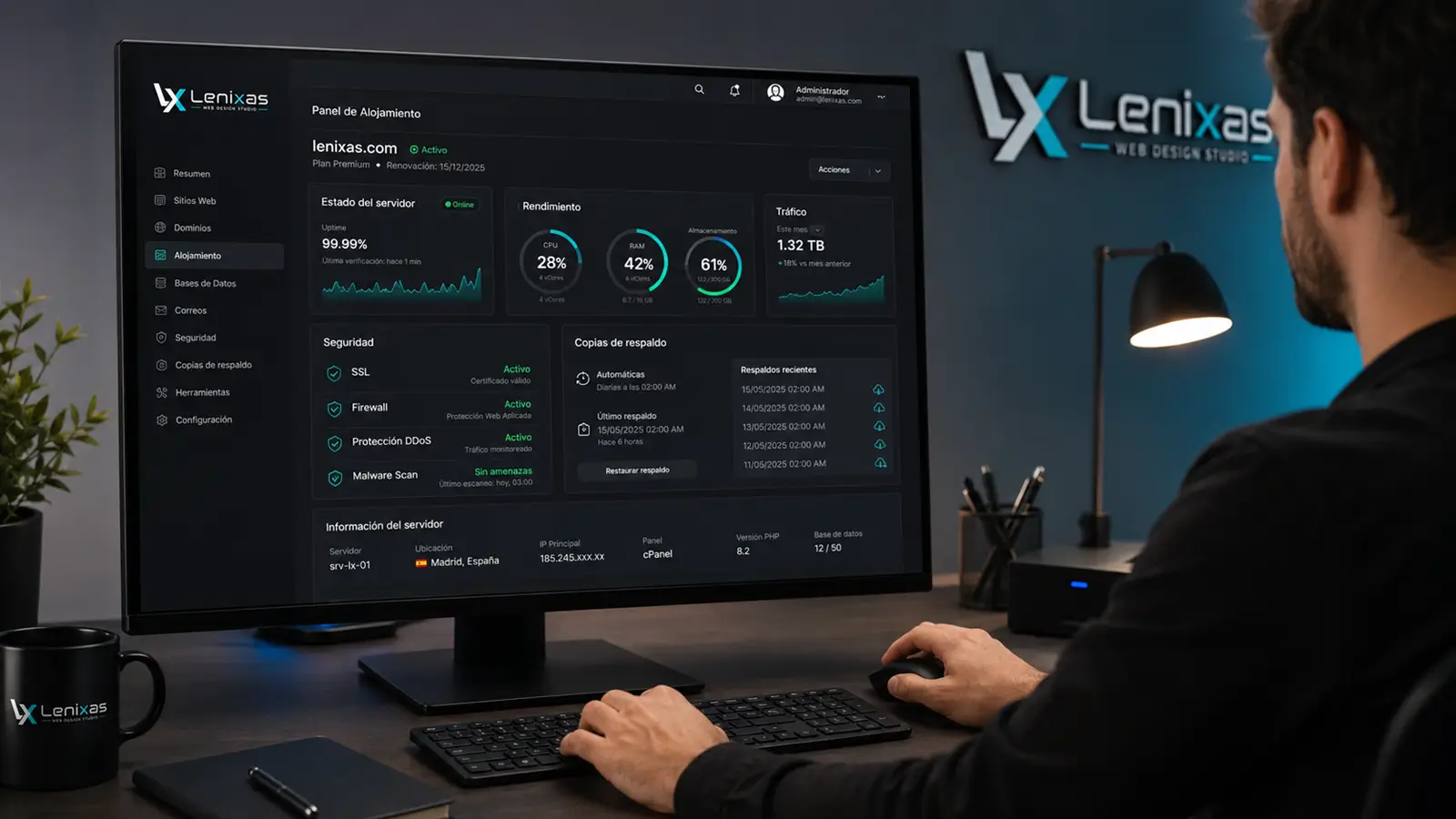
That is why we can manage the hosting and monitor the elements required to keep the website in good condition.
The service may include:
- initial hosting configuration;
- domain connection;
- SSL certificate installation;
- creation of email accounts;
- backup configuration;
- website migration;
- monitoring of available storage;
- review of technical issues;
- server-related support;
- resource upgrades when necessary.
The scope is adapted to the type of website and the level of support required by each company.
Infrastructure prepared for your business
Hosting is not simply a space for storing files. It is the technical foundation on which the entire website operates.
At Lenixas Web Design Studio we help you choose a fast, stable and secure solution, avoiding unnecessary resources or hosting that is insufficient for the project.
Your website should be available whenever your clients need it, load quickly and have infrastructure that is ready to support continued growth.
Find the right hosting for your website
Tell us what type of website you need to host and we will recommend a solution tailored to its characteristics, functions and the future development of your business.