
A faster, more efficient website designed to turn visitors into clients
A website should not be limited to having an attractive design. It should also load quickly, work correctly on all devices and provide every visitor with simple, intuitive navigation.
Website optimisation brings together a range of technical, visual and structural improvements designed to increase a website’s performance, reduce loading times and help users find the information they need.
At Lenixas Web Design Studio we analyse each project individually to identify the elements that may be slowing the website down or making it harder to use. We then apply solutions adapted to its technology, content and commercial objectives.
What is website optimisation?
Website optimisation is the process of improving a website’s speed, performance, structure and user experience.
This work may include reducing image file sizes, removing unnecessary resources, configuring caching, improving code and reviewing different server-related aspects.
The aim is to create a faster, more stable and easier-to-use website, whether accessed from a computer, mobile phone or tablet.
Why is website optimisation important?
Users expect a website to respond quickly. When a page takes too long to load, is difficult to use or displays errors, visitors are more likely to leave before discovering what the company has to offer.
A properly optimised website helps to:
- reduce loading time;
- improve navigation;
- reduce visitor abandonment;
- make access from mobile devices easier;
- make better use of server resources;
- improve content presentation;
- create a stronger technical foundation for SEO;
- increase the chances of contact or conversion.
Optimisation improves the user experience and helps the website perform its commercial function more effectively.
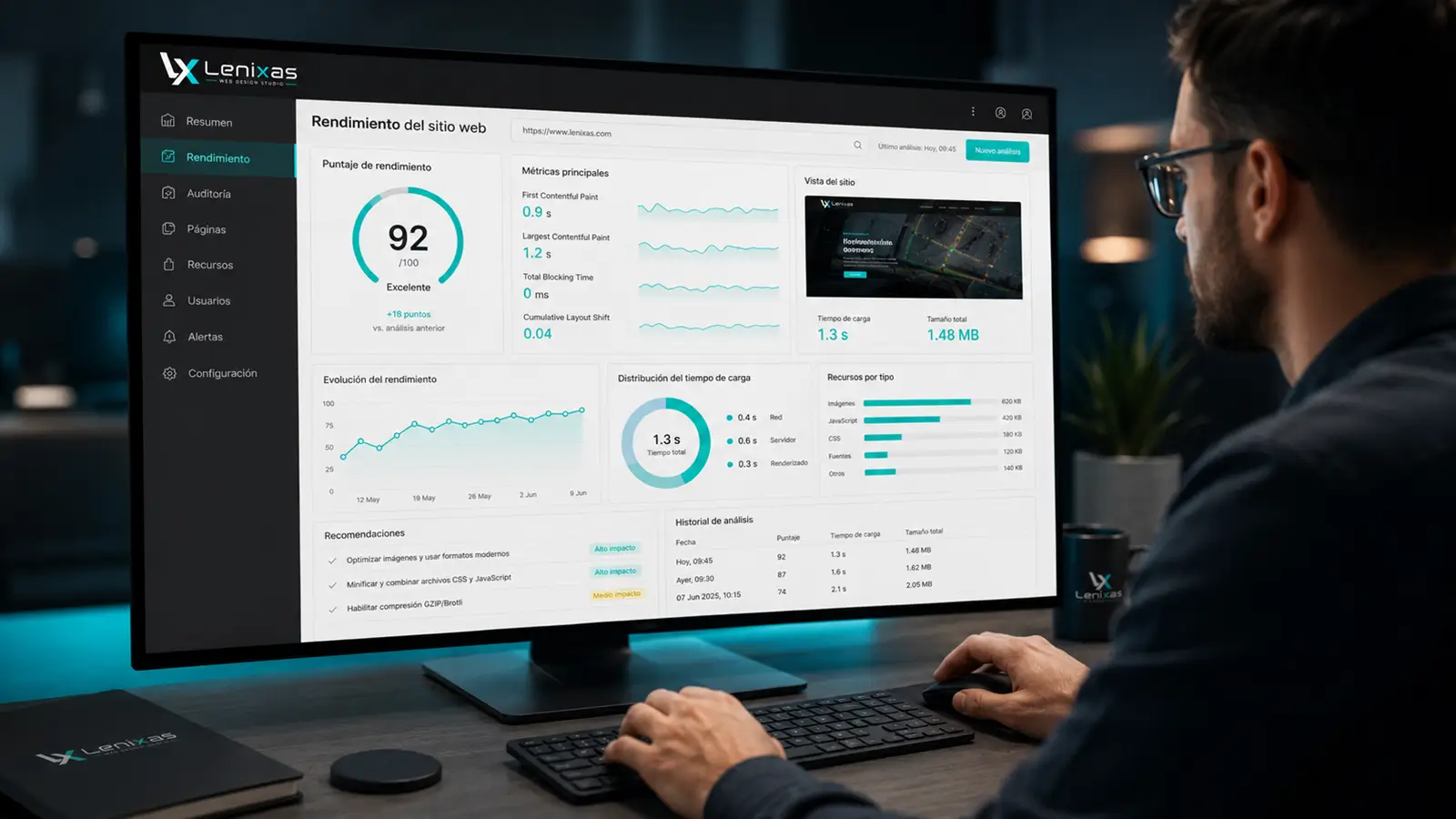
Improving loading speed
Speed is one of the main elements we review during optimisation. Every image, extension, font, animation or file added to a website can affect how long it takes to display its content.
We analyse which resources the website uses and determine which ones can be optimised, replaced or removed.
Improvements may include:
- image compression;
- conversion to modern formats;
- reducing file sizes;
- lazy loading of images and videos;
- font optimisation;
- removal of duplicate resources;
- review of unnecessary extensions;
- cache configuration;
- reducing server requests;
- database optimisation.
Every change is made with the website’s design and functions in mind so that performance improvements do not negatively affect its appearance.
Image optimisation
Large images are one of the most common causes of slow loading. A photograph can look correct on screen without requiring an excessively large file.
During optimisation, we review:
- image dimensions;
- file format;
- compression level;
- visual quality;
- unused images;
- adaptation for different devices;
- loading of images located outside the visible screen area.
The aim is to reduce file sizes while maintaining suitable quality for the company’s professional presentation.
Caching and content delivery
Caching systems temporarily store certain website elements so that they do not need to be generated or downloaded in full on every visit.
Proper configuration can speed up the loading of:
- images;
- style sheets;
- JavaScript files;
- frequently visited pages;
- static resources;
- system-generated content.
For certain projects, a content delivery network, known as a CDN, can also be used. This system distributes files from different locations to bring them closer to the user and improve response times.
Optimisation for mobile devices
A website may work correctly on a computer while presenting significant problems on a mobile phone.
That is why we review the mobile version separately, paying attention to:
- loading speed;
- image size;
- text legibility;
- menu functionality;
- button dimensions;
- forms;
- spacing between elements;
- unnecessary content on small screens.
Mobile optimisation is not limited to adapting the design. It should also reduce resource consumption and make navigation easier over mobile connections.
Reviewing code and resources
Over time, a website may accumulate files, functions and settings that it no longer needs. This happens especially after multiple design changes, extension installations or updates.
We analyse the structure to identify:
- unnecessary files;
- duplicate code;
- functions that block loading;
- inefficient extensions;
- scripts used on pages where they are not needed;
- technical errors;
- conflicts between components;
- outdated settings.
A cleaner structure reduces the server load and makes future maintenance easier.
Database optimisation
Websites managed through a CMS store much of their information in a database. Over time, revisions, drafts, temporary records and other unnecessary data may accumulate.
Database optimisation can help to:
- reduce accumulated data;
- improve query times;
- remove unnecessary records;
- organise database tables;
- reduce server load;
- improve the performance of the administration panel.
Before making significant changes, a backup must be prepared so that the information can be restored if an issue occurs.
Hosting and server performance
Not every speed problem originates within the website itself. In some cases, the hosting does not provide sufficient resources or uses a configuration that is unsuitable for the project.
During the analysis, we can also review:
- server capacity;
- available memory;
- system versions;
- resource limits;
- response time;
- server location;
- cache configuration;
- website compatibility;
- database performance.
When the hosting does not provide a suitable foundation, we can recommend a more balanced solution based on the website’s needs.
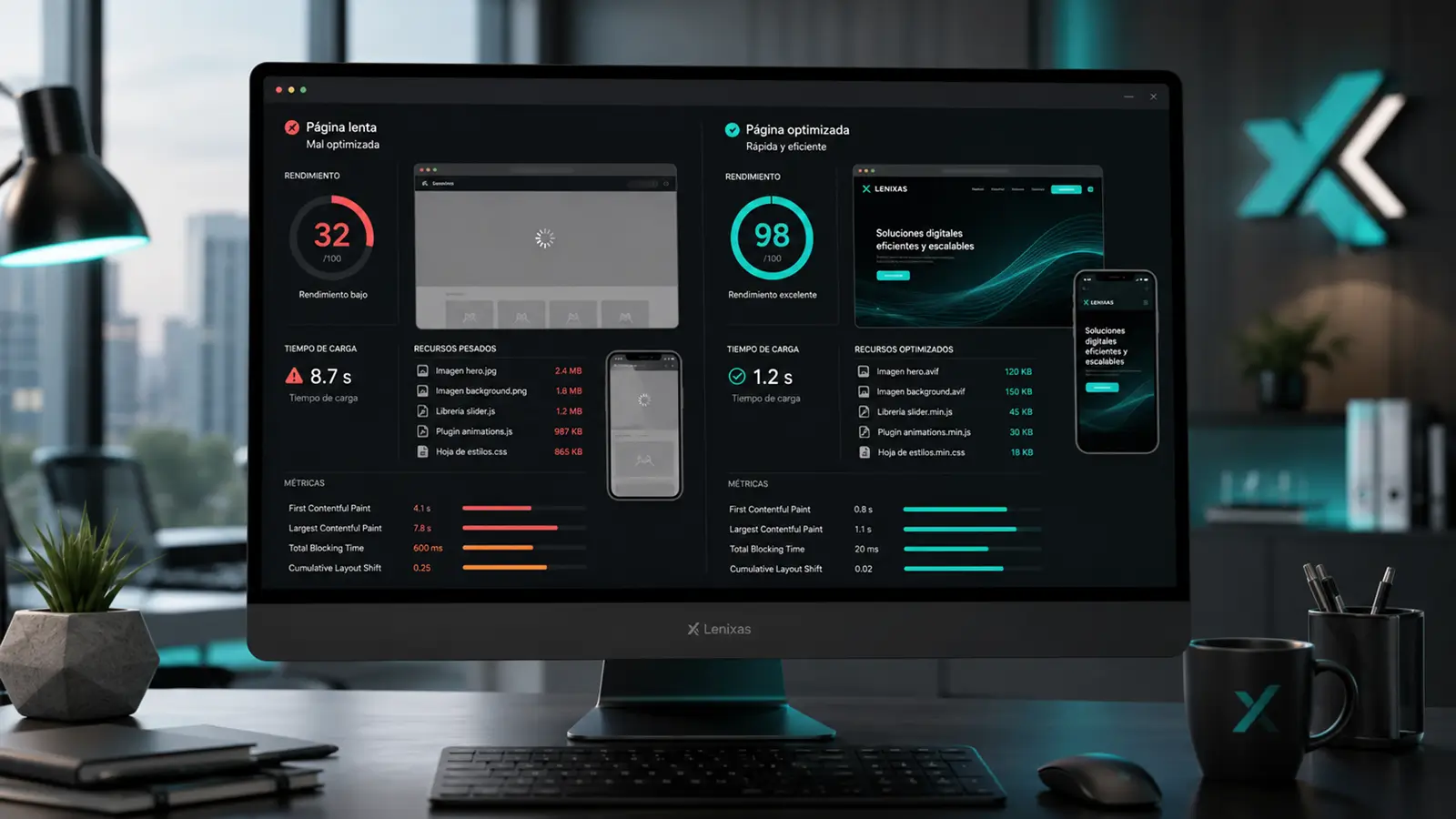
A better experience for users
Technical optimisation should result in a visible improvement for the people who use the website.
A fast website allows visitors to:
- access information sooner;
- browse without interruptions;
- view more pages;
- complete forms more easily;
- use the website from any device;
- find services and contact details quickly.
When navigation is smooth, the company conveys a more professional image and increases the likelihood that users will remain on the website.
A stronger technical foundation for SEO
Speed and mobile performance are among the factors that can influence a website’s technical quality.
An optimised website makes it easier for search engines to crawl its content, reduces errors and creates better conditions for developing an SEO strategy.
During the process, we can also review:
- heading structure;
- URLs;
- internal links;
- pages with errors;
- unoptimised images;
- basic metadata;
- duplicate content;
- section indexing;
- mobile adaptation.
Technical optimisation alone does not guarantee top positions in search engines, but it creates a stronger foundation for improving the website’s visibility.
What can the optimisation service include?
The scope depends on the condition and technology of each website, but it may include:
- initial performance analysis;
- image optimisation;
- cache configuration;
- minification of CSS and JavaScript files;
- database cleanup;
- extension review;
- removal of unnecessary resources;
- mobile optimisation;
- hosting review;
- backup configuration;
- detection of technical errors;
- testing before and after changes.
Once the work is complete, we check that the website retains its design and main functions correctly.
A website prepared to perform better
Website optimisation is not about applying a single configuration. It is a process that must be adapted to the structure, content and needs of each project.
At Lenixas Web Design Studio we work to make your website load faster, use its resources more efficiently and provide visitors with a more comfortable experience.
An optimised website conveys professionalism, makes navigation easier and is better prepared to support the growth of your business.
Improve your website’s performance
We will analyse the condition of your website and recommend the most suitable improvements to increase its speed, stability and ease of use.