How to choose a web design company: 10 things to check before hiring
Choosing a web design company is an important decision for any business.
In many cases, the website will be the first point of contact between the company and its potential clients. Its design, functionality and content can directly influence trust, quotation requests and the image conveyed by the brand.
The problem is that not all web design proposals include the same things.
Two quotations may look similar, but one may include preparation of the mobile version, basic optimisation, forms, domain configuration and support, while another may be limited to installing a template and adding a few texts.
For this reason, you should not choose a company based only on price or an attractive presentation.
Before commissioning a website, you need to check exactly what the project includes, who will own the website, which access credentials you will receive and what will happen when the work is complete.
Below, we explain ten important aspects that will help you choose the right web design company for your business.
1. Check whether they understand your company’s needs
Before discussing colours, photographs or animations, a web design company should take an interest in your business.
To prepare an effective website, it needs to know:
- which services or products you offer;
- who your clients are;
- where you operate;
- what makes your company different;
- what objective the website should achieve;
- how clients currently contact you;
- whether you need several languages;
- whether you want to receive bookings, enquiries or sales;
- what growth plans you have.
Not every company needs the same type of website.
A self-employed professional offering a single service can start with a simple website. A company with several areas of activity may need a separate page for each service. A shop requires products, categories, payments and order management.
If the design company proposes a solution before asking about your objectives, there is a risk that you will receive a visually attractive website that is of little practical use to your business.
A good proposal should be tailored to the company and not consist merely of reusing the same structure for every client.
In another article, we explain what type of website your business needs according to its offer, clients and objectives.
2. Review their previous projects
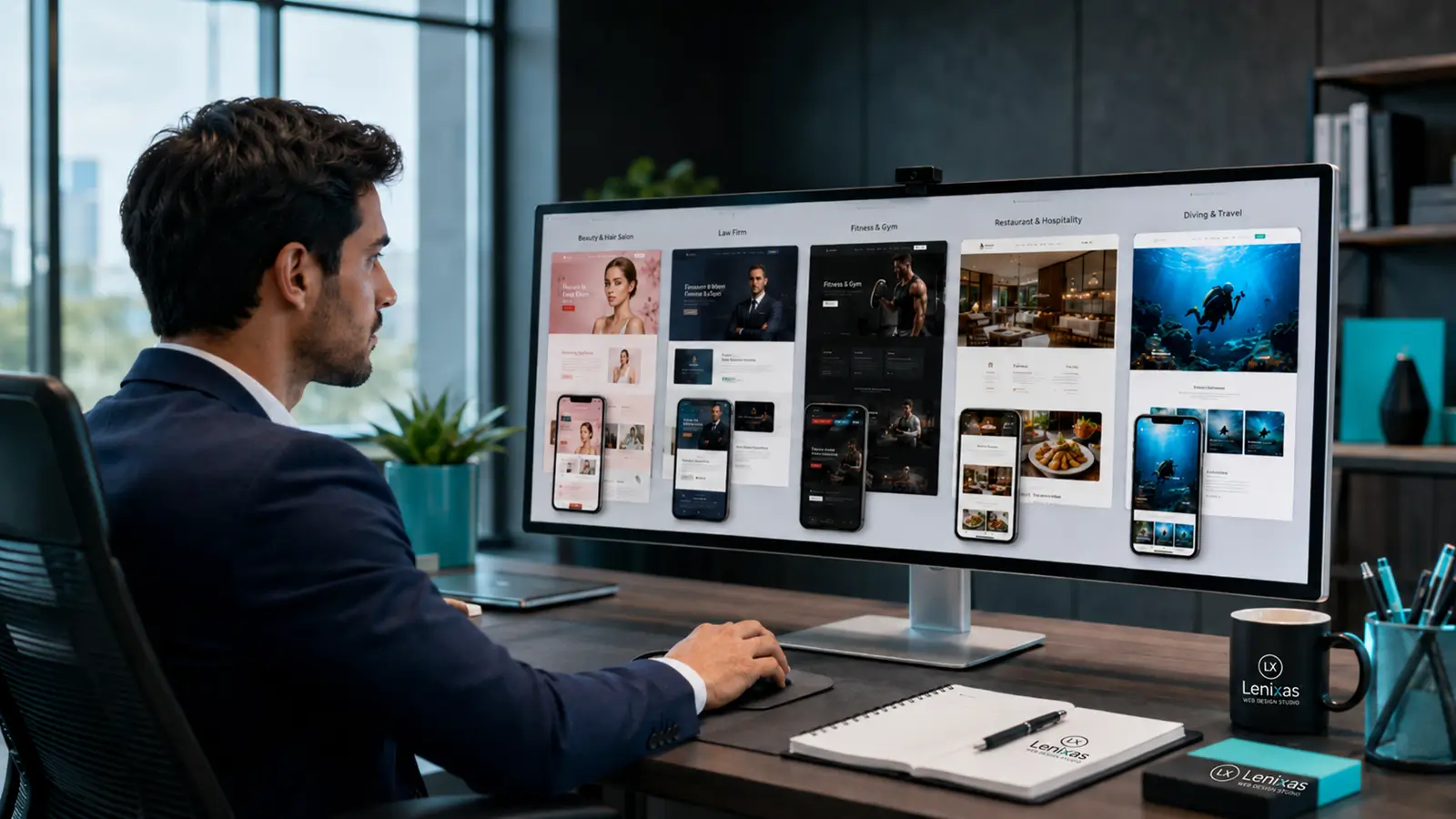
A portfolio allows you to assess the style, quality and experience of a web design company.
Not every project needs to be the same as the one you require. However, they should show that the company knows how to adapt the design to different industries and types of clients.
When reviewing previous projects, pay attention to:
- the clarity of the homepage;
- the organisation of the menu;
- the presentation of the services;
- the quality of the images;
- the readability of the texts;
- the use of contact buttons;
- how it works on mobile phones;
- consistency between the different sections;
- the browsing speed;
- the overall professional appearance.
Do not limit yourself to looking at a screenshot. Whenever possible, open the websites and check how they work.
A static image may look excellent, but it does not show whether the menu is easy to use, whether the forms work or whether the mobile version has been prepared correctly.
It is also worth checking whether every project has exactly the same structure. A professional company should adapt the website to the client’s needs rather than merely changing the logo and colours of a template.
You can review our latest website projects and see how we adapt each design to different companies and industries.
3. Request a clear and detailed proposal
A web design quotation should explain what the client will receive.
A figure without a sufficient description can create problems during the project. Each party may interpret differently what was included in the price.
The proposal should state, among other things:
- the type of website;
- the approximate number of sections or subpages;
- the functions;
- preparation of the mobile version;
- the forms;
- the languages;
- social media integration;
- configuration of contact buttons;
- the domain and hosting;
- corporate email;
- the number of revisions;
- the approximate timeframe;
- support after publication;
- additional costs.
It should also be clear what the client must provide.
For example:
- logo;
- texts;
- photographs;
- translations;
- legal information;
- contact details;
- prices and service descriptions.
The more detailed the proposal is, the lower the risk of receiving unexpected charges or discovering at the end that an important function is missing.
Before comparing quotations, review our website prices and check which elements are included in each type of project.
4. Find out who will own the website
This is one of the most important aspects and, at the same time, one of the questions clients most often forget to ask.
Before starting the project, you should know:
- in whose name the domain will be registered;
- who will be the hosting account holder;
- who will have access to the administration panel;
- whether you will receive the passwords;
- whether you will be able to move the website to another provider;
- whether you will be able to continue using the website after the collaboration ends;
- whether there are licences requiring annual payments;
- who will own the texts, images and design.
The domain should be registered in the name of the client or the company that owns the website.
You should also have access to the tools required to manage your digital presence. A company may handle maintenance, but that does not mean it should permanently control all access credentials.
Be cautious of proposals in which the website works only while you continue paying a fee, especially when it is not clearly explained what will happen if you decide to end the service.
The relationship with a web design company should be based on transparency, not on making it difficult for the client to manage or move their website.
5. Check that the website will be adapted for mobile phones
A modern website should work correctly on different screen sizes.
It is not enough to shrink the desktop version. The content must be reorganised so that it is comfortable to use on a mobile phone.
The company should check:
- the text size;
- the positioning of images;
- the operation of the menu;
- the visibility of buttons;
- the width of forms;
- the spacing between elements;
- the loading speed;
- how easy it is to call or send a message;
- the readability of each section.
Asking whether the website will be responsive is important, but it is also worth checking exactly what that means to the provider.
True mobile adaptation requires every section to be reviewed. Some elements need to change size, others need to be placed in a different order and some may require a specific version for small screens.
In our article about the signs that a website needs a redesign we explain how a poor mobile version can cause a company to lose potential clients.
6. Ask what preparation for Google is included in the project
A visually attractive website will not automatically appear in the top positions on Google.
However, from the outset it should be prepared correctly so that search engines can understand its structure and content.
Ask whether the project includes:
- clear titles for each page;
- understandable URLs;
- a correct heading structure;
- texts related to each service;
- descriptions for search results;
- image optimisation;
- internal links;
- indexing configuration;
- connection to analytics tools;
- a sitemap;
- mobile adaptation;
- speed improvements;
- installation of the security certificate.
It is important to distinguish between the basic preparation of a website and a complete SEO service.
Initial optimisation creates a suitable foundation. Ongoing SEO may require new content, keyword analysis, technical improvements and work over several months.
A professional company should explain this difference and should not promise immediate results or a guaranteed first position.
It is also worth asking how the texts will be prepared. A website containing only general phrases and very little content will have greater difficulty explaining the offer to both users and search engines.
In the next article, we analyse what a professional website should include to present a company correctly and help it attract clients.
7. Define who will prepare the texts and images
Design is only one part of a website.
Texts and photographs have a major influence on how visitors perceive the company.
Before hiring, you should know:
- who will write the content;
- whether the texts are included in the price;
- how much information you need to provide;
- whether the company will proofread the texts;
- who will select the photographs;
- whether your own images or stock images will be used;
- whether translations are included;
- whether content will be prepared for each service;
- how many revisions you can request.
A website may have an excellent structure, but it will not work properly if the texts do not explain the offer.
The content should answer the client’s real questions:
- what does the company offer?;
- who is the service for?;
- what benefits does it provide?;
- how does the process work?;
- how long does it take?;
- how can information be requested?;
- why should they choose this company?
The photographs should also represent the business correctly.
Whenever possible, it is advisable to use real images of the team, projects, premises or services. When suitable photographs are not available, professional images may be used, but they should maintain a consistent visual style.
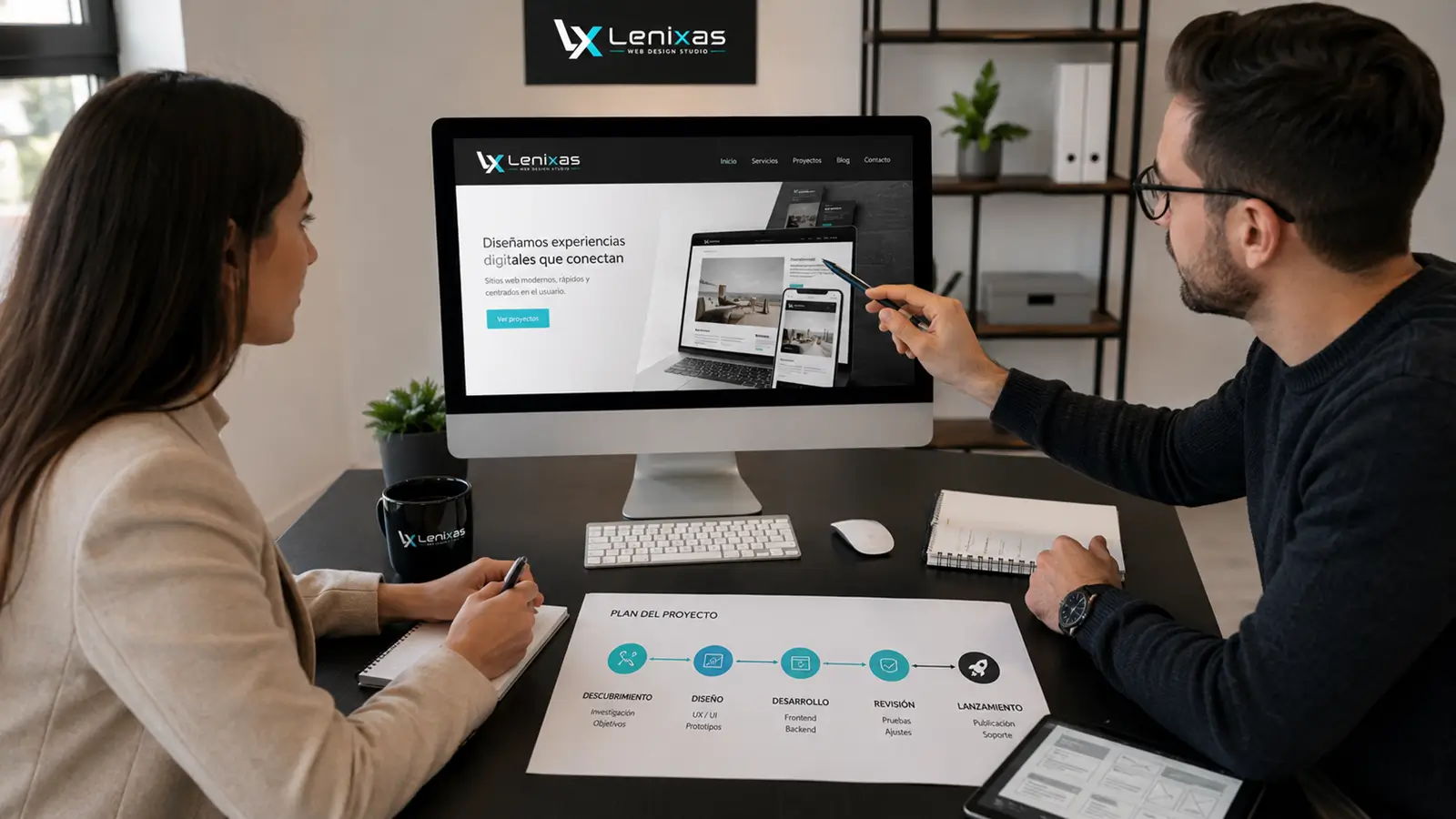
8. Ask how the work will be organised
The creation process should be explained before work begins.
Each company may work differently, but the client should know what will happen at every stage.
A process may include:
- business analysis;
- definition of the structure;
- delivery of materials;
- preparation of the design;
- content creation;
- presentation of a first version;
- submission of revisions;
- mobile adaptation;
- testing;
- publication.
It is also important to know:
- who the contact person will be;
- how revisions will be submitted;
- how many rounds of changes are included;
- how much time the client has to respond;
- what happens when materials are missing;
- how the final version will be approved;
- when each payment must be made.
A clear process helps avoid delays and misunderstandings.
For example, if the company needs photographs and texts before starting, it should communicate this. If the client takes several weeks to send the information, the delivery deadline may also change.
Good communication is just as important as design.
You can learn more about our company and the way we work in the About us.
9. Check what support you will receive after publication
The work does not always end when the website goes online.
After publication, questions, minor corrections or problems that were not detected during testing may arise.
Before hiring, ask:
- whether there is a support period;
- what type of corrections are included;
- who will carry out updates;
- whether backups are provided;
- whether security is reviewed;
- how much maintenance costs;
- what happens if an error appears;
- whether you will be able to modify the content;
- whether you will receive instructions for using the website;
- how much it costs to add new functions.
It is also worth distinguishing between support and maintenance.
Support may cover questions or errors related to the recently completed project. Ongoing maintenance may include updates, backups, security and technical assistance over a longer period.
Not every company needs to hire a monthly service, but they should know who will look after the website and what responsibilities each party has.
You can consult our frequently asked questions to learn more about creating and managing a website.
10. Do not choose only the cheapest option
Price is important, especially for a company that is just starting out. However, it should not be the only criterion.
A cheaper offer may be suitable if it includes everything the business needs. The problem arises when the low price is achieved by removing essential elements or leaving significant costs until later.
Before choosing, compare:
- which pages will be created;
- which functions are included;
- whether the mobile version is prepared;
- who will write the texts;
- whether you will have full access;
- what support you will receive;
- whether there are recurring payments;
- whether the domain is included;
- whether the hosting is configured;
- whether the website is prepared for Google;
- how many revisions are allowed.
You should also consider the time that a poor website may cause you to lose.
A website that does not explain the services well, does not work on mobile devices or does not make contact easy can reduce enquiries and damage the company’s image.
On the other hand, the most expensive option is not automatically the best either.
What matters is that the proposal is clear, suitable for your business and proportionate to the project’s objectives.
In one of our upcoming articles, we explain how much a professional website costs and which factors genuinely influence the price.
Questions to ask before hiring a web design company
Before accepting a quotation, prepare a list of questions.
You can ask:
- What exactly does the price include?
- How many pages will be created?
- Will the website be mobile-friendly?
- Who will prepare the texts?
- Who will provide the images?
- How many revisions are included?
- How long will the project take?
- Will the domain be registered in my name?
- Will I receive all access credentials?
- Will I be able to change provider?
- What annual costs will there be?
- What support will I receive after publication?
- Will the website be prepared for Google?
- Will I be able to modify the content?
- What happens if I want to add new functions?
The answers should appear in writing in the proposal, quotation or service terms.
Do not rely only on promises made during a conversation. A clear description protects both the client and the company carrying out the project.
Warning signs before hiring
There are certain situations that should make you review the proposal more carefully.
For example:
- it does not explain what the price includes;
- no real projects are shown;
- the first position on Google is promised;
- annual costs are not disclosed;
- the domain is registered in the provider’s name;
- the client does not receive access credentials;
- there is no description of the process;
- it does not state how many revisions are included;
- texts or images are used without explaining their source;
- no information about support is provided;
- the quotation is too general;
- the client is pressured to pay immediately.
A professional company should be able to answer your questions clearly.
It should also acknowledge when a function requires an additional cost or when an expectation is unrealistic.
Trust begins before the first section of the website is designed.
Website or social media: which do you need first?
Some companies still hesitate between investing in a website or focusing only on social media.
Both tools can be useful, but they serve different purposes.
Social media allows you to publish updates, communicate with followers and show the day-to-day activity of the business. A website allows you to organise the offer, appear on Google, build trust and receive enquiries in a more professional way.
In our article website or social media we explain how to combine both channels to achieve better results.
How to make the final decision
After comparing different proposals, review which one best meets the real needs of your company.
Do not ask only which one has the lowest price. Also consider:
- the clarity of the offer;
- the quality of the projects;
- communication;
- transparency;
- knowledge of your industry;
- how well the proposal is tailored;
- support;
- the timeframe;
- access credentials;
- the possibility of expanding the website in the future.
The right company should help you understand the project, not complicate it with unnecessary technical terms.
It should also explain what you need now and which elements can be added later.
A professional website does not need to be the largest or most expensive. It should be well prepared, present the business correctly and make it easy for clients to take action.
Choose a company that works with your business in mind
A website should not be created merely to have an online presence.
It should help present your services, build trust and make contact with new clients easier.
At Lenixas, we analyse every project individually. Before starting, we study the company’s activity, offer, clients and the objectives the website must achieve.
You can discover our web design services and explore the solutions we offer.
View our website prices to compare the different types of projects.
You can also review our latest completed projects.
Choosing the right provider means finding a team that listens to your needs, explains every stage and prepares a solution tailored to your company. At Lenixas Web Design Studio we work with a clear process, direct communication and projects designed to achieve real objectives.
Are you looking for a company to create your website?
Tell us what your business does, which services you offer and what you would like to achieve with your new website.
We will analyse your project and propose a solution tailored to your needs.