10 signs that your website needs a redesign
Having a website does not necessarily mean having an effective tool for attracting clients.
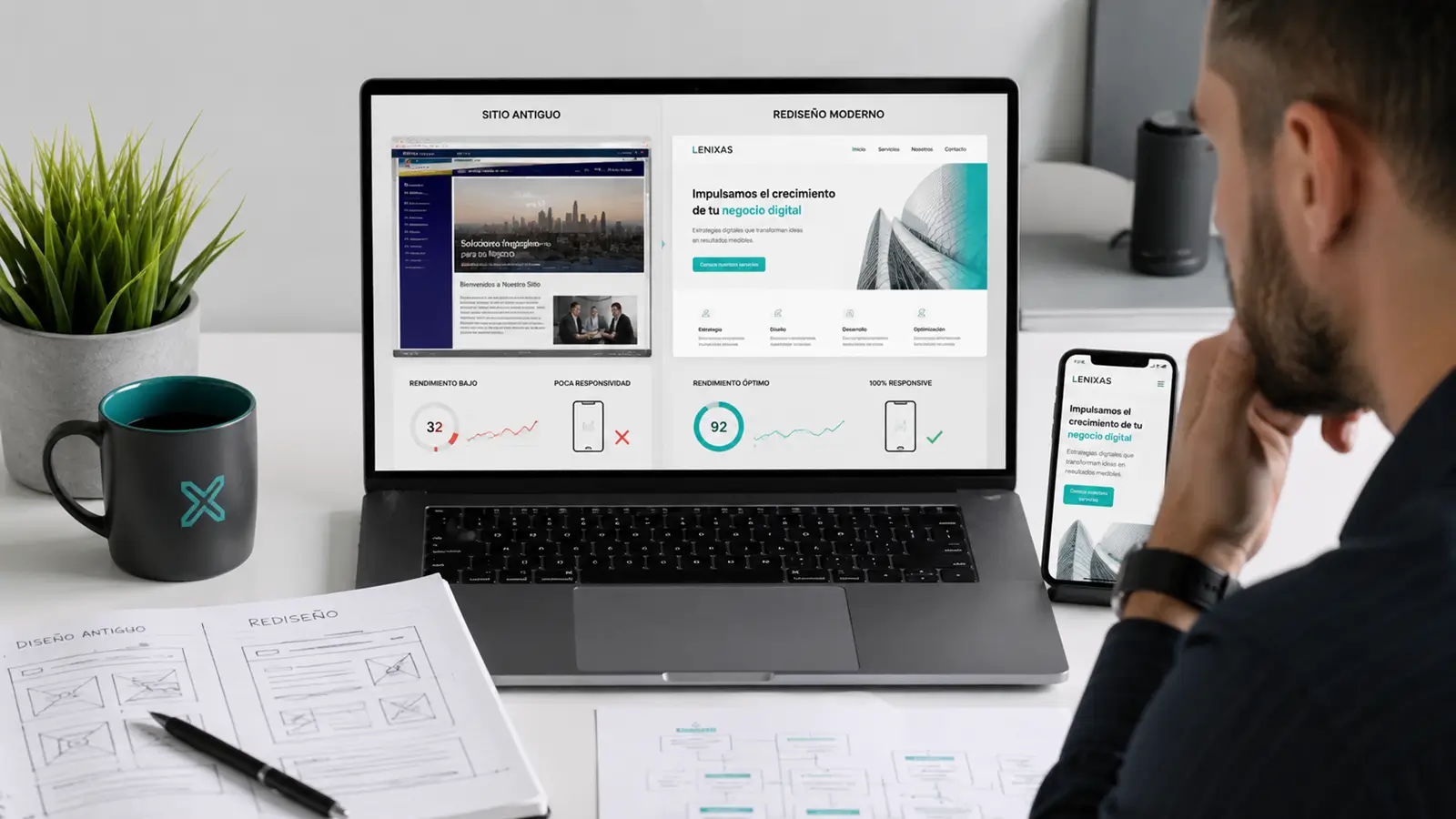
Many companies created their website several years ago and have barely updated its design, content or functionality since then. The website remains online, but it no longer represents the business correctly, does not meet users’ current expectations or make contact easy.
In other cases, the website looks modern but loads slowly, is difficult to use on a mobile phone or does not clearly explain the company’s services.
An outdated website can create distrust and cause a potential client to leave before discovering the offer.
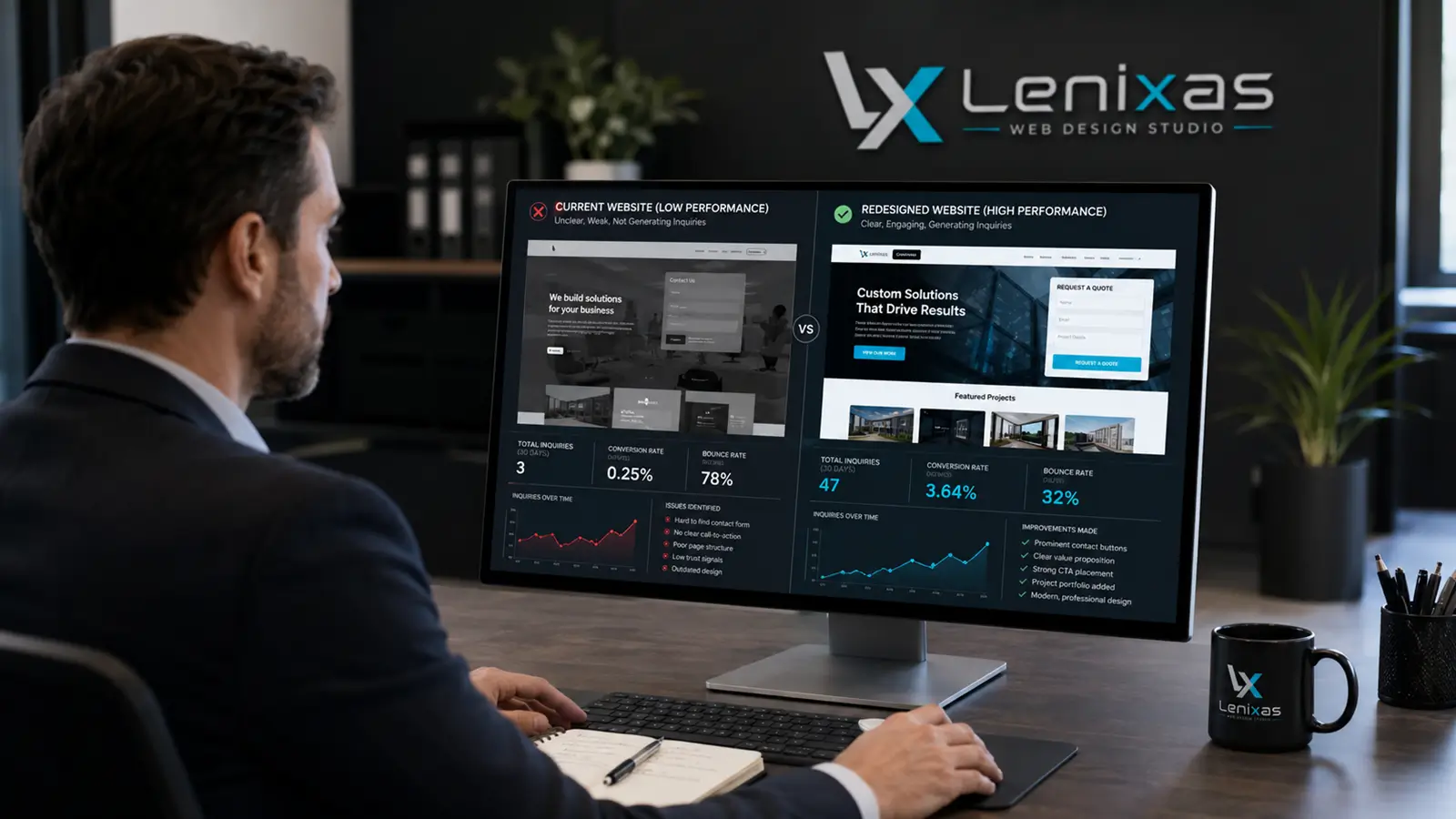
Redesigning a website does not mean changing only the colours or photographs. A professional redesign can also improve the structure, speed, user experience, presentation of services and ability to turn visits into enquiries.
Below, we present ten signs that indicate it is time to review your website.
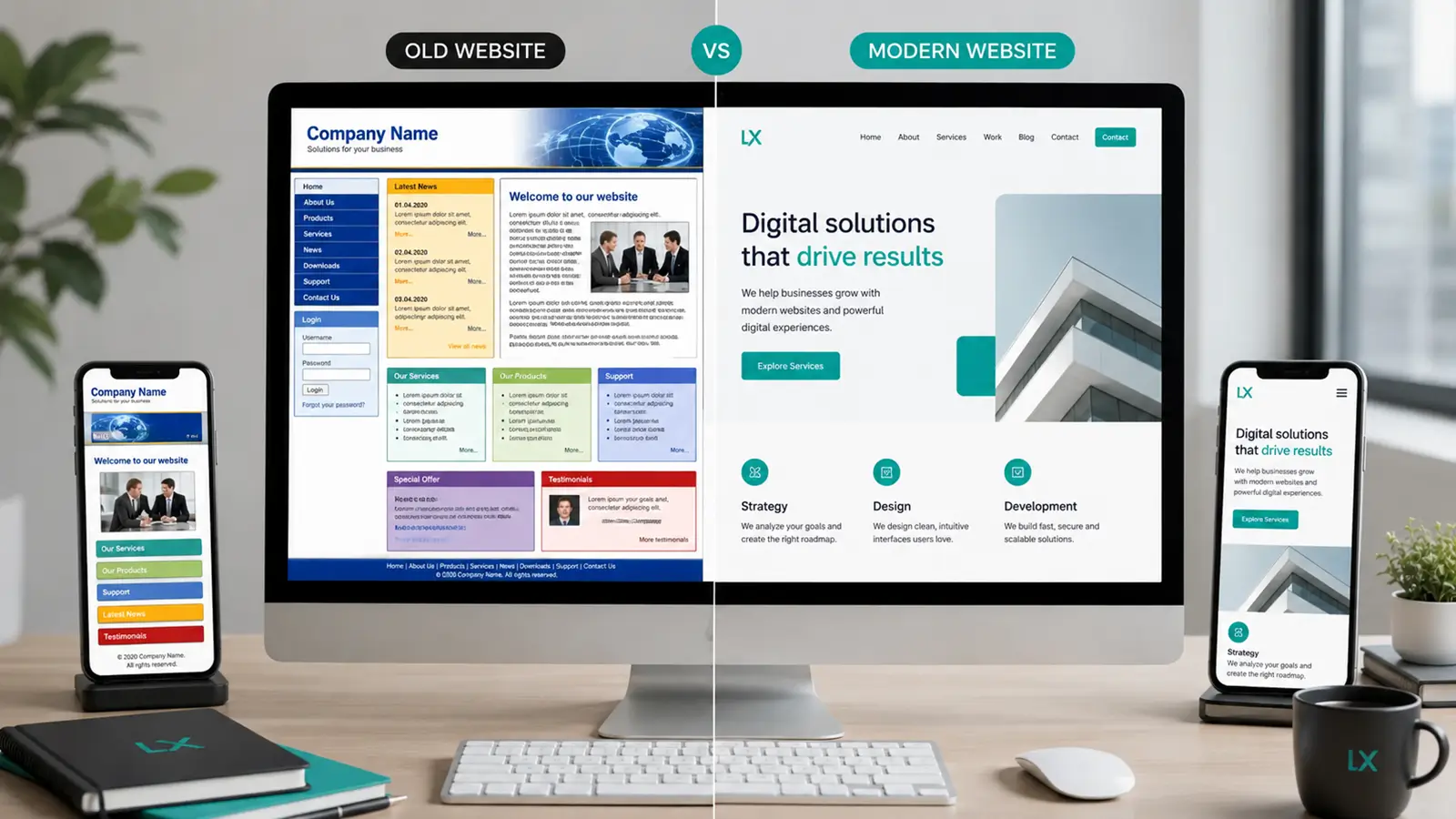
1. Your website looks outdated
Design is one of the first things a person notices when visiting a website.
Visitors have not yet read about the services, do not know the company’s experience and do not know whether the prices are competitive. However, within a few seconds they have already formed a first impression.
A website can look outdated for different reasons:
- it uses fonts that are difficult to read;
- it uses too many colours;
- it displays small or low-quality images;
- it contains very long blocks of text;
- it uses buttons that are difficult to see;
- it has a disorganised structure;
- it displays graphic elements that no longer represent the company’s identity;
- it uses a different design in each section.
An outdated appearance does not necessarily mean that the company works badly. However, a new client has no other point of reference and may associate the condition of the website with the quality of the service.
If your company has evolved, expanded its offer or improved its image, the website should also reflect those changes.
You can view some of our website projects to see how a modern structure can present a company clearly and professionally.
2. The website does not work correctly on mobile phones
A website should be comfortable to use on a computer, tablet and mobile phone.
It is not enough for the website simply to open on a smartphone. All its elements must adapt correctly to a smaller screen.
Some common problems include:
- text that is too small;
- images extending beyond the screen;
- buttons that are difficult to tap;
- menus that do not open correctly;
- forms that are too wide;
- columns displayed in the wrong order;
- excessive spacing between sections;
- cut-off content;
- pop-up windows that block navigation.
When a user has to zoom in with their fingers, scroll sideways or spend too long looking for the contact button, they are very likely to leave the website.
A mobile-friendly website allows users to browse comfortably, understand the offer quickly and contact the company without difficulty.
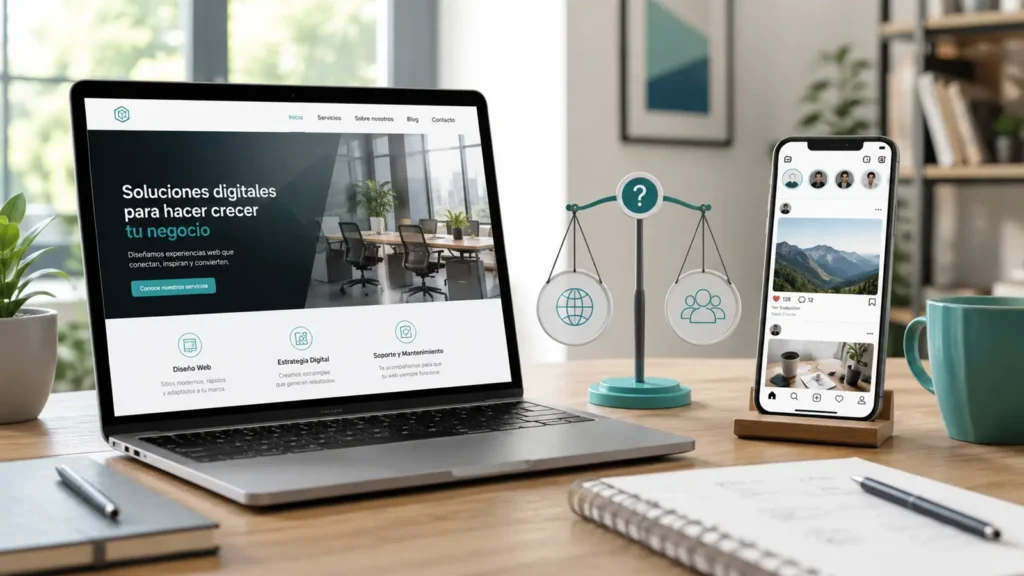
In our article about websites or social media we explain why having your own website remains important even when a company has an active presence on Instagram or Facebook.
3. The website takes too long to load
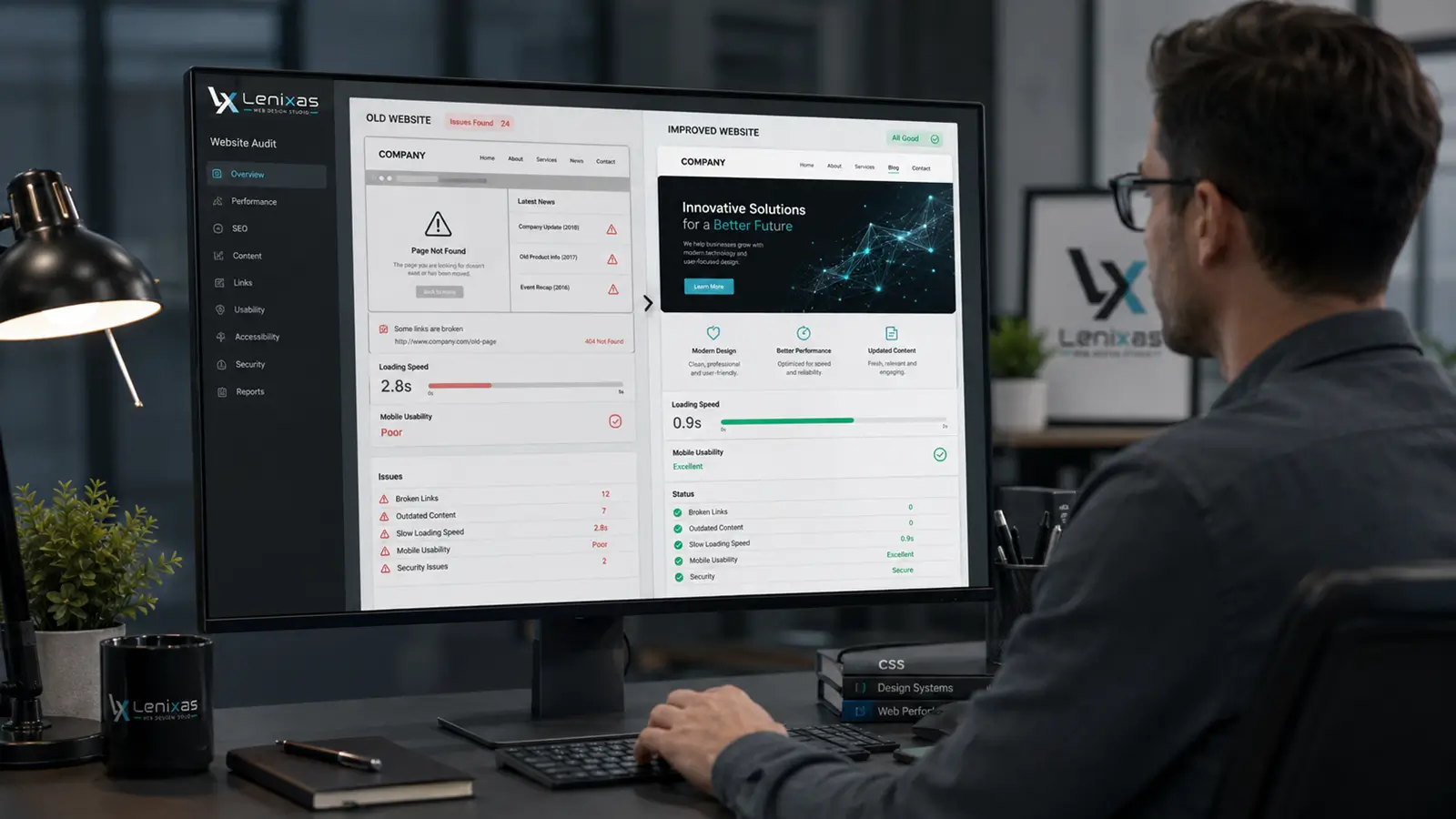
Speed directly affects the user experience.
When a website takes too long to display its content, visitors may think that it is not working correctly and close the window before discovering the offer.
Speed problems may be related to:
- images that are too large;
- videos loaded incorrectly;
- too many plugins;
- unnecessary code;
- an inefficient server;
- excessive animations;
- outdated templates;
- lack of optimisation;
- technical errors accumulated over the years.
A slow website can be particularly problematic on mobile devices or when the user connects through a less stable network.
It is not always necessary to remove all images, videos or visual effects. The important thing is to use them correctly and find a balance between design, quality and performance.
A redesign makes it possible to review the elements slowing the website down and rebuild its structure more efficiently.
4. Visitors do not quickly understand what your company offers
A person visiting a website should understand within a few seconds:
- what the company offers;
- who it is aimed at;
- which problem it solves;
- where it operates;
- what they need to do to obtain more information.
When the main message is too general, visitors may not know whether they have reached the right place.
Phrases such as “innovative solutions”, “quality and commitment” or “we turn ideas into reality” may sound good, but they do not explain what the company actually does.
The top section of the website should present a clear proposition. For example:
- website design for companies;
- complete renovations in Tenerife;
- beauty treatments in Costa Adeje;
- tax advice for self-employed professionals;
- private excursions around Tenerife;
- professional photography for hotels.
The information should be organised so that users can easily find the service they need.
If your website requires an additional explanation by telephone for the client to understand the offer, the structure and texts probably need to be reviewed.
5. The information is outdated
A website should represent the company’s current situation.
Visitors may lose trust when they find:
- services that are no longer offered;
- outdated prices;
- incorrect opening hours;
- expired promotions;
- contact details that do not work;
- photographs of very old projects;
- team members who no longer work for the company;
- broken links;
- news published many years ago;
- outdated legal information.
An abandoned website may give the impression that the company is no longer active.
It can also create awkward situations. For example, a client may request a service that no longer exists or expect a price that has not been valid for a long time.
During a redesign, it is advisable to review every page, remove unnecessary information and prepare a structure that makes content easy to update.
A modern website should make it easy for the company to modify text, photographs, services and other elements without rebuilding the entire site.
6. The website receives visits but does not generate enquiries
A website may have visitors and still fail to attract new clients.
This can happen when the website provides information but does not guide users towards a specific action.
Some of the most common problems are:
- there is no visible contact button;
- the form is hidden;
- the telephone number cannot be tapped on a mobile phone;
- there is no WhatsApp button;
- the user does not know how to request a quotation;
- the calls to action are unclear;
- the contact page contains too many fields;
- answers to the most common questions are missing;
- it does not explain what will happen after the request is submitted.
Every important section should help visitors move forward.
After presenting a service, a button can be included to request information. After showing a project, the user can be invited to view a similar solution. After answering frequently asked questions, access to the contact form can be provided.
The aim is not to fill the entire website with buttons, but to place them at the right moments.
A professional website should combine information, trust and a clear route towards contact.
7. Your offer has changed, but the website structure remains the same
Companies evolve.
A business may begin by offering a single service and, over time, add new specialities, operate in other locations or target different types of clients.
When the original structure is no longer sufficient, information is added without proper planning. Duplicate pages appear, menus become too long and important services are hidden within general sections.
A redesign may be necessary when:
- you have added new services;
- you operate in new areas;
- you have changed your target audience;
- you need several language versions;
- you have changed the visual identity;
- you want to sell products online;
- you need bookings or payments;
- you want to create a blog;
- you want to present your projects more effectively;
- the company has changed its name or positioning.
The structure should support the growth of the business.
Not every company needs the same type of website. Some can operate effectively with a simple website, while others need separate service pages, specific forms, an online shop or a booking system.
In another article, we analyse what type of website each business needs according to its offer, objectives and stage of development.
8. The website does not inspire trust
Before contacting a company, users look for signs that allow them to confirm that it is a genuine and professional business.
A website may create distrust when:
- it does not provide information about the company;
- it does not include complete contact details;
- it uses low-quality photographs;
- it contains spelling mistakes;
- it contains links that do not work;
- it does not present completed projects or work;
- it does not include reviews;
- it uses an unprofessional domain;
- it does not have a secure connection;
- it presents contradictory information;
- it uses a different design on every page.
Trust is built through small details.
A clear presentation, suitable photographs, visible contact information and a project section can help the client make a decision.
It is also important to explain the working process. Users want to know how they can request a quotation, what information they need to send and what will happen afterwards.
A professional website should not hide the company behind marketing phrases. It should provide enough information to reduce visitors’ doubts.
Before commissioning a project, it is also advisable to learn how to choose a web design company and which questions to ask when comparing different proposals.
9. Your website barely appears on Google
Visual design is not the only element that needs to be reviewed.
A website also needs a structure that search engines can understand. Every important service should have sufficient content and a clear URL.
A website may have visibility problems when:
- all offers appear on a single page;
- the titles are too general;
- different services use almost identical texts;
- descriptions are missing;
- the images do not contain suitable information;
- important pages are not linked;
- the blog is not related to the offer;
- duplicate pages exist;
- some content cannot be indexed;
- the navigation structure is confusing.
A redesign does not automatically guarantee top positions on Google. However, it can create a much stronger foundation for developing search visibility.
The new structure should take both users and search engines into account.
This involves organising pages correctly, using clear titles, preparing useful content and making navigation between services, projects and articles easier.
The blog can also help, provided that it answers real questions from potential clients and is connected to the company’s important pages through links.
In our next article, we explain what a professional website should include to work as a commercial tool rather than merely as a presentation.
10. You feel embarrassed to send your website address to a client
This is one of the clearest signs.
When a potential client asks for more information and you prefer to send only your Instagram profile, a PDF file or several photographs through WhatsApp, you probably no longer trust your website.
The website may no longer represent the current quality of your services, may display outdated information or may look very different from the image you want to convey.
The website should make commercial work easier.
You should be able to share its address with confidence, knowing that the client will find:
- a professional presentation;
- a clear explanation of the services;
- projects or examples;
- reviews;
- answers to frequently asked questions;
- contact information;
- an easy way to request a quotation.
If the website has become something you prefer to hide, it is time to review it.
Is it necessary to create a completely new website?
Not always.
The decision depends on the technical condition of the website, its structure and the company’s objectives.
In some cases, it may be sufficient to:
- update the text and photographs;
- improve the mobile version;
- reorganise the menu;
- create new service pages;
- optimise images;
- correct forms;
- add calls to action;
- update the visual identity.
In other cases, modifying an old structure may require more time and create more problems than building a new website.
This usually happens when the website uses outdated technology, contains numerous errors, does not support good mobile adaptation or has been modified many times without clear planning.
Before deciding, it is advisable to analyse:
- which parts work correctly;
- which elements should be retained;
- which content remains useful;
- which technical problems exist;
- which objectives the new website should achieve;
- what the client really needs.
How much does it cost to redesign a website?
The price depends on the scope of the project.
Updating the design of a simple website does not cost the same as reorganising a website with numerous services, several language versions, an online shop or booking systems.
The quotation may depend on:
- the number of pages;
- the condition of the current website;
- the need to prepare new texts;
- the number of photographs;
- the required functions;
- the language versions;
- content migration;
- technical optimisation;
- the forms;
- the online shop;
- integration with external tools.
Before comparing prices, it is important to check what each proposal includes.
In another article, we analyse how much a professional website costs and which elements may influence the quotation.
You can also view our website prices.
A website should evolve together with your company
A website should not remain unchanged for many years while the business evolves.
Services evolve, clients have new expectations and more and more people access information from a mobile phone.
Updating a website is not about following every visual trend. It is about ensuring that it remains clear, fast, useful and consistent with the company.
A good redesign should help to:
- present the offer more effectively;
- improve navigation;
- increase trust;
- make contact easier;
- adapt the website to mobile devices;
- organise the content;
- create a stronger foundation for SEO;
- reflect the company’s current image.
At Lenixas, we analyse the situation of each project before proposing a solution.
You can discover our web design services and see how we work with websites adapted to the real needs of each business.
You can also review our completed projects.
A redesigned website can improve your company’s image, make navigation easier and help you present your services more clearly. Visit the Lenixas homepage and discover how we can transform an old website into a modern tool for your business.
Does your website need a redesign?
Send us your website address and tell us what you would like to improve. We will review your situation and propose a solution tailored to your company.