Website or social media: what does your business really need to attract clients?
Many companies begin their activity by creating a profile on Instagram, Facebook or TikTok. It is a quick and simple way to present products, publish photographs and stay in contact with clients.
However, over time an important question arises:
Is having social media enough, or does a company also need a professional website?
The answer depends on the type of business, its objectives and the way it wants to attract new clients. Social media can provide visibility and immediate communication, while a website offers greater trust, control and visibility on Google.
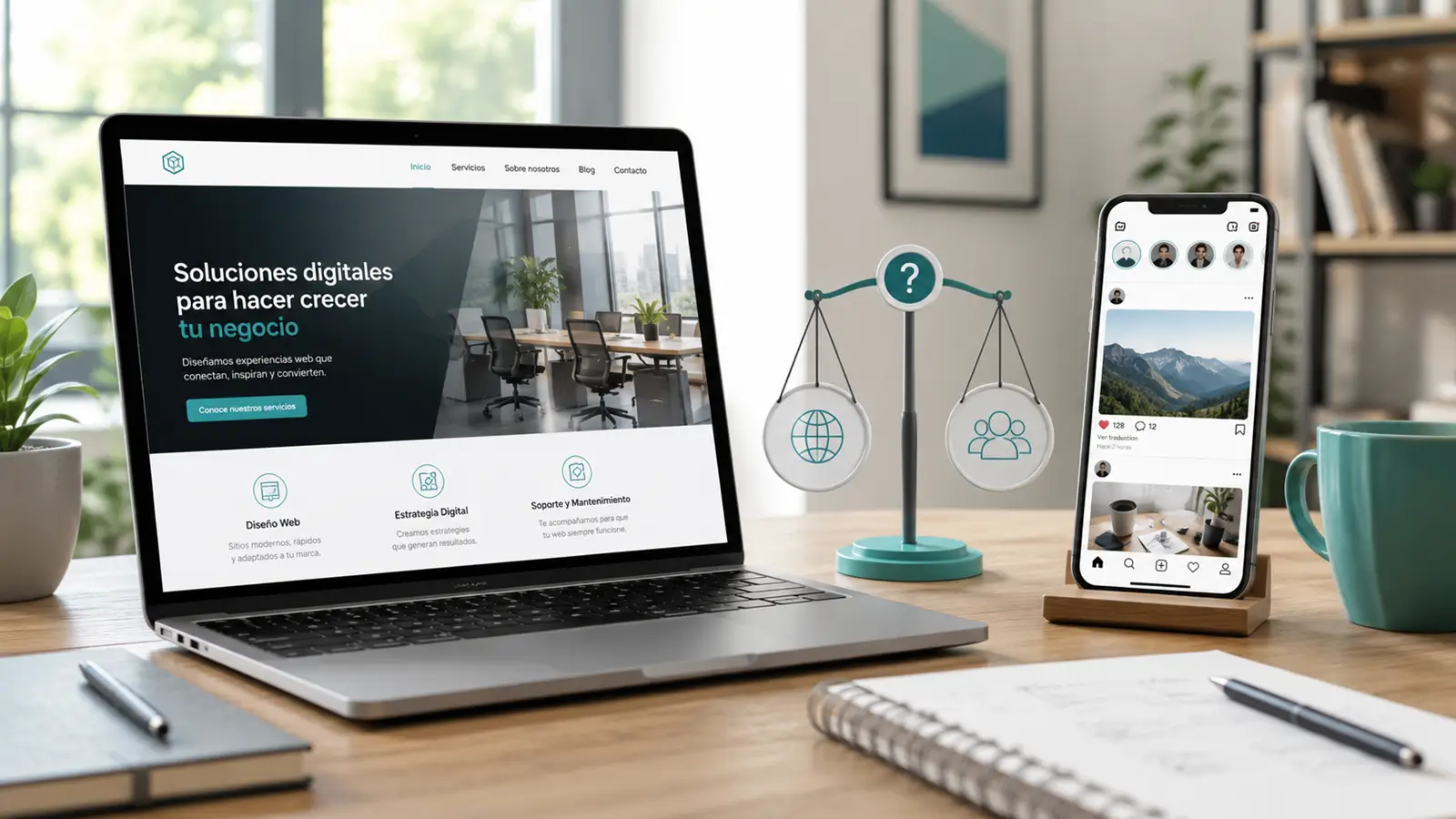
In most cases, it is not a matter of choosing between a website and social media. The best strategy is to use both tools in a coordinated way.
Below, we explain the most important differences and which option may help your company more effectively.
1. Social media allows you to get started quickly
Creating a business profile on a social network is usually simple. In just a few minutes, you can add the business name, a description, photographs and contact details, and begin publishing content.
This makes social media a useful tool for companies that are just starting out and do not yet have a website.
Through Instagram, Facebook, LinkedIn or TikTok, you can:
- present your products or services;
- publish updates;
- answer questions;
- receive messages;
- show photographs and videos;
- build a community around your brand;
- promote special offers;
- direct traffic towards other sales channels.
Social media also allows you to maintain closer communication with clients. A post, story or video can show the day-to-day activity of the company and help convey a more human image.
However, having followers does not necessarily mean attracting clients.
For social media to work, you need to publish regularly, respond to messages, create interesting content and keep the account active. When a company stops posting for several weeks, its visibility can decrease quickly.
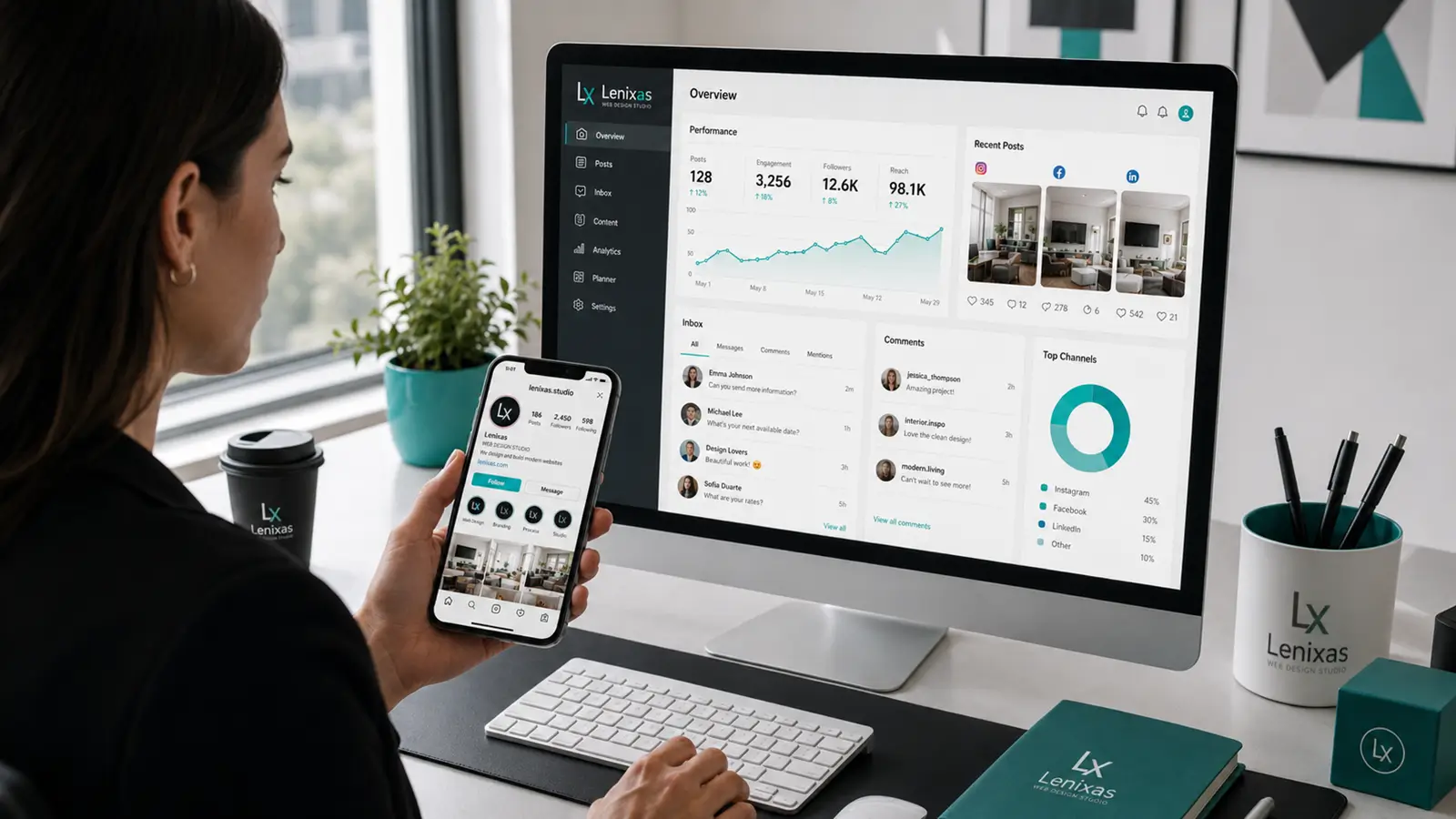
2. Relying only on social media can be risky
Although social media is useful, the company does not have complete control over it.
The account exists within an external platform and must comply with its rules. Algorithms, publication formats and content reach may change at any time.
A company that relies only on Instagram or Facebook may face problems such as:
- reduced reach of posts;
- temporary account suspension;
- loss of access;
- changes to the platform’s terms;
- accidental deletion of content;
- difficulty organising a broad offer;
- dependence on paid advertising;
- inability to fully control the presentation of the brand.
There is also another important limitation: information published on social media quickly disappears beneath newer content.
A client searching for a specific service may struggle to find a post published several months earlier. The offer, terms, prices or frequently asked questions may be scattered across photographs, videos and highlighted stories.
A website allows all this information to be presented much more clearly and in a more organised way.
3. A professional website is your company’s digital headquarters
Social media can be compared to rented space within an external platform. A website, by contrast, is a space created specifically for your company.
On it, you can decide:
- how the brand is presented;
- which services appear first;
- how the information is organised;
- which colours and visual elements are used;
- which actions the visitor should take;
- which forms the business needs;
- which content should appear on Google.
A professional website allows you to bring all important information together in one place:
- company presentation;
- detailed description of services;
- prices or packages;
- project photographs;
- client reviews;
- frequently asked questions;
- contact information;
- forms;
- location;
- legal policies;
- blog articles.
In another article, we explain in detail what a professional website should include to build trust and help a company attract new clients.
The client does not need to review dozens of posts to understand what the company offers. They can go directly to the service that interests them and find all the information required to make a decision.
This is especially important for companies that offer several services, operate in different locations or need to present their offer in several languages.
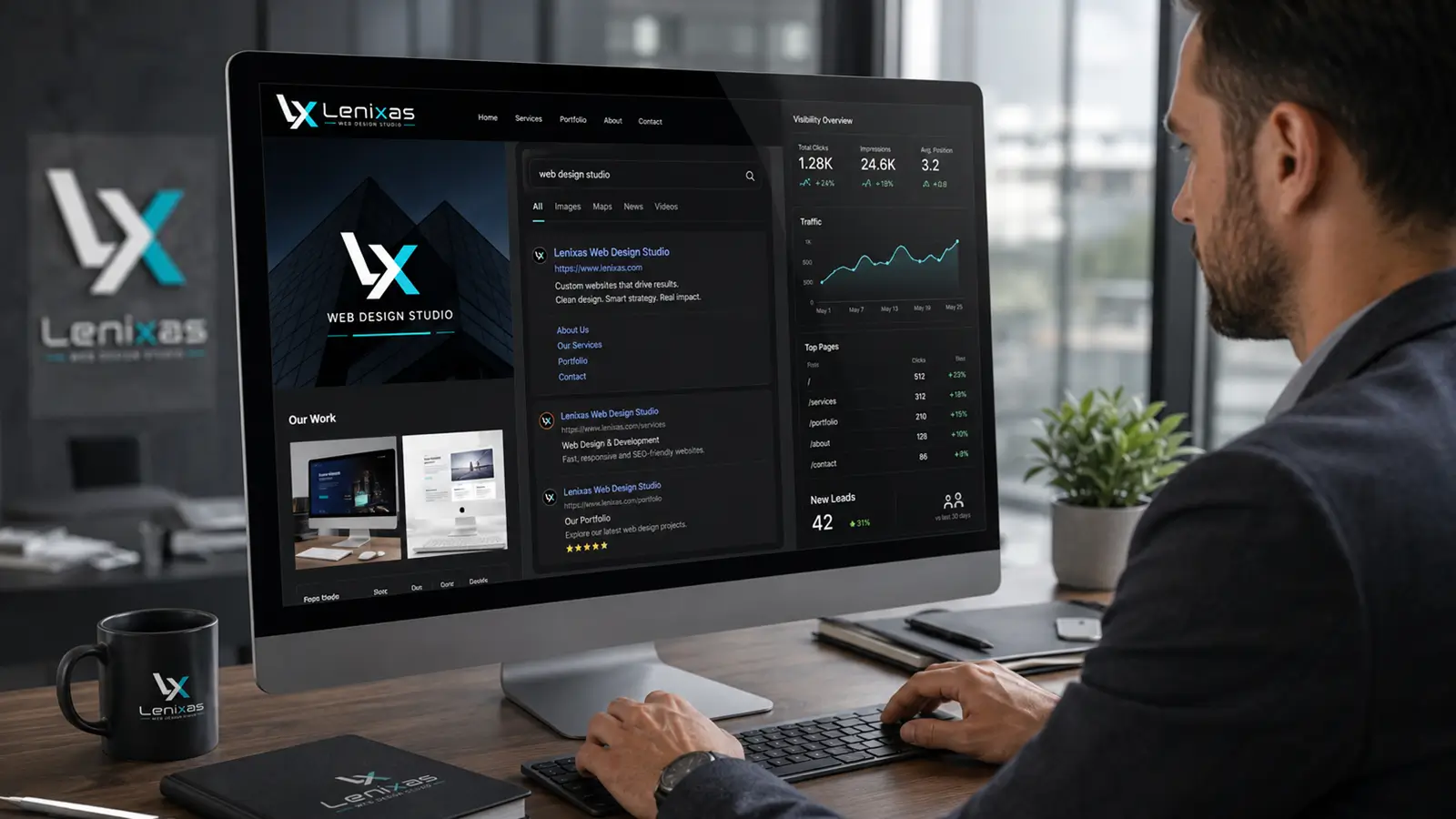
4. A website allows clients to find your company on Google
People do not search for companies only on social media.
When they need a specific service, they often use Google and enter searches such as:
- web designer in Tenerife;
- website for a company;
- online shop development;
- lawyer near me;
- beauty centre in Costa Adeje;
- renovation company;
- car rental in Tenerife;
- boat excursions;
- dental clinic;
- Italian restaurant.
A properly structured website can appear in results related to those services.
This makes it possible to reach people who do not yet know the brand but are already searching for what the company offers.
Social media mainly shows content to followers, similar users or people reached through advertising. Google, by contrast, can connect a company with clients who have a specific need at that moment.
For this reason, a website prepared for search engines can become a stable source of visits and quotation requests.
This does not mean that a new website will automatically appear in the top positions. Visibility requires a good structure, useful content, technical optimisation, indexing and time.
Without a website, the possibilities for developing a stable presence on Google are much more limited.
5. A website increases trust in a company
Before purchasing a service, many clients search for information about the company.
They want to check:
- whether the business appears genuine;
- which services it offers;
- where it is located;
- how they can make contact;
- what experience it has;
- which projects it has completed;
- what other clients think;
- what its terms are;
- whether it presents a professional image.
An active social media profile can help, but a well-designed website creates a different impression.
A website with its own domain, corporate email, clear information, professional photographs and complete contact details can increase the company’s credibility.
Receiving a message from a free email address is not the same as receiving one from an address linked to the company’s domain. Likewise, sending a client to a profile full of posts is not the same as showing them a page dedicated to the service they are looking for.
A website also allows completed projects, reviews, experience and real examples to be presented clearly and in an organised way.
All these elements help reduce doubts before a client makes a purchase or requests a quotation.
It is also important to know how to choose a web design company and which aspects to check before commissioning a website.
6. A website can turn visits into real enquiries
A website should not serve only as a presentation. Its purpose can also be to generate contacts, bookings or sales.
To do this, it should guide the visitor towards a specific action.
Depending on the type of business, it may include:
- a contact form;
- a WhatsApp button;
- a quotation request;
- a booking calendar;
- an online shop;
- a telephone call;
- a download;
- a registration;
- a payment system;
- a form for requesting information.
Each service can have its own page with a description, benefits, frequently asked questions and a call to action.
This way, the client arrives directly at the service they need and does not have to search for information among old posts.
A website also makes it possible to analyse visitor behaviour: which pages they view, which devices they use and which content generates the most interest.
This data can help improve the offer, the structure of the website and promotional activities.
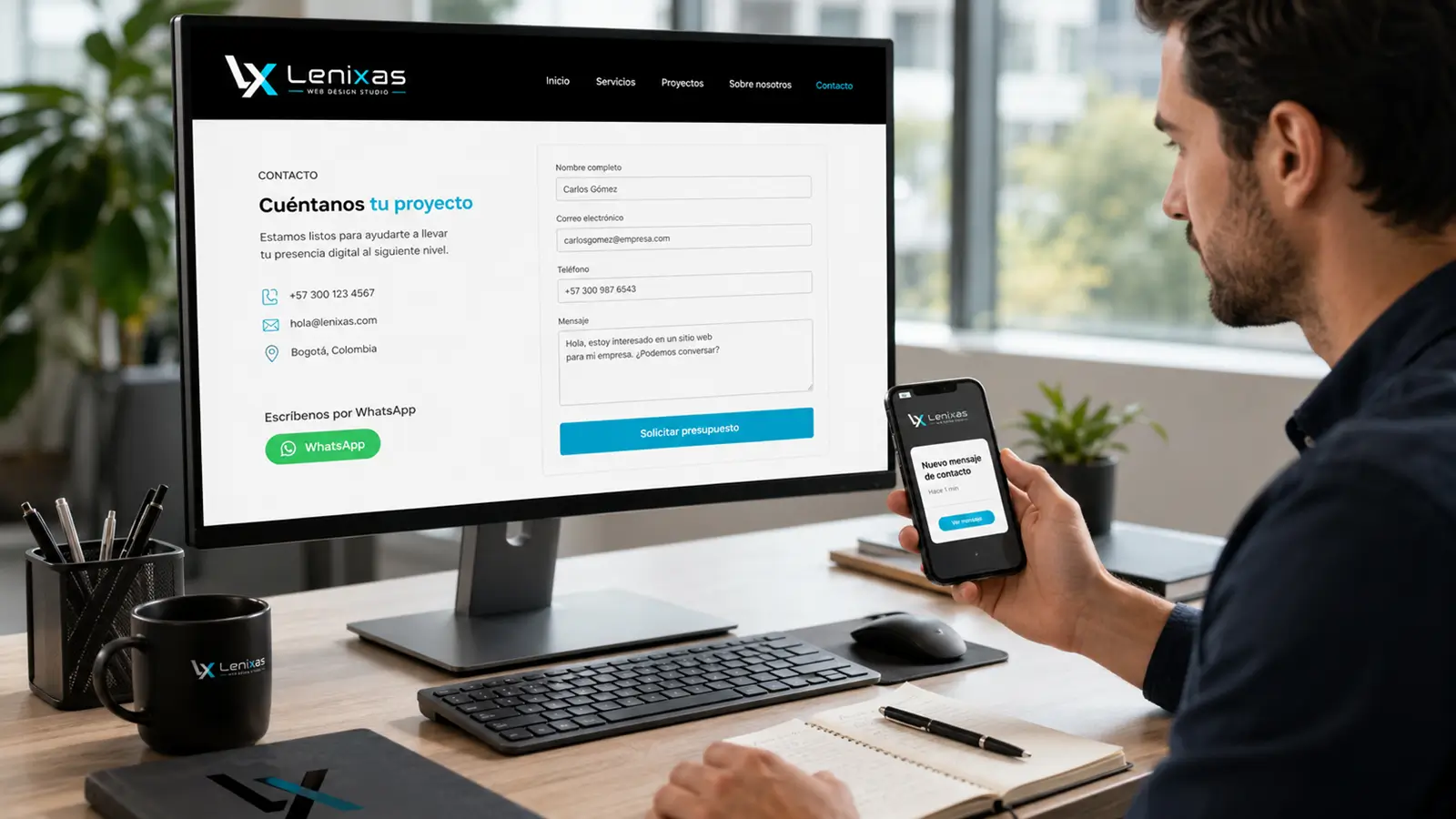
7. Which option does your business need?
The choice depends on the stage the company is at, its offer and the objectives it wants to achieve.
To make a better decision, you can consult our guide on what type of website your business needs.
A business that has just started
A small company can begin its digital presence with social media, especially if it is still preparing its offer.
However, it is worth thinking from the beginning about having your own domain and a simple website. Even a one-page website can present services, display contact details and provide a more professional image.
A self-employed professional
A photographer, trainer, adviser, designer or specialist can use social media to show their work and a website to explain their services in greater detail.
The website can present experience, prices, availability, reviews and contact methods.
A local business
Restaurants, beauty centres, clinics, workshops and service companies need to appear when clients search for nearby options.
A properly prepared website can help increase the company’s visibility and make it easier for users to find its location, opening hours and contact details.
A company that sells products
An online shop allows products to be organised, orders to be managed and payments to be received. Social media can be used to present new products and direct clients towards the shop.
A company with several services
When the offer is broad, social media is usually not enough to explain it properly.
A website makes it possible to create a separate section for each service, answer frequently asked questions and direct the client towards the appropriate form.
A company that already has an old website
Having a website does not always mean that it works correctly.
A slow, outdated, unclear or difficult-to-use mobile website can cause visitors to leave without making contact.
In that case, it is worth learning the signs that a website needs a redesign.
A company that wants to grow
When the objective is to invest in advertising, SEO, new markets or a broader offer, a professional website becomes an essential tool.
Campaigns can direct users towards a page specifically designed to generate enquiries or sales.
8. The best solution is to combine a website with social media
A website and social media should not compete with each other. Each tool serves a different purpose.
Social media helps to:
- capture attention;
- show updates;
- build a community;
- publish videos and photographs;
- maintain regular communication;
- direct visitors towards the website.
A website helps to:
- present the company professionally;
- organise the offer;
- appear on Google;
- build trust;
- receive enquiries;
- sell products;
- manage bookings;
- provide permanent information;
- maintain greater control over the digital presence.
An effective strategy may begin with a post on Instagram or Facebook. A person discovers the company, becomes interested and visits the website to learn about its services, view projects and request a quotation.
The opposite can also happen. A client finds the company on Google, visits its website and then checks its social media profiles to see recent photographs and learn more about the brand.
When both channels are connected, the company provides a much more complete experience.
Before starting the project, it is also normal to ask how much a professional website costs and which elements should be included in the price.
Do I need a website if I already have Instagram?
Having Instagram does not remove the need for a website.
Instagram can be an excellent communication channel, but it does not fully replace your own platform where you can present your services, develop visibility on Google and control your company’s information.
A website does not automatically replace social media either. If your clients use these platforms, continuing to publish content can help you stay in contact and increase brand recognition.
For most companies, the most advisable option is to use social media to generate interest and a website to turn that interest into enquiries, bookings or sales.
Build a digital presence that works for your company
Your online presence should not depend only on an account within an external platform.
A professional website can become the centre of your digital strategy: a place where clients discover your business, understand your offer and can contact you easily.
At Lenixas, we create modern websites adapted to mobile phones and designed according to the real needs of each company.
Not every company needs the same solution. That is why we analyse the type of business, its services, clients and objectives before beginning the project.
Discover our web design services.
Explore some of our website projects.
View our website prices and find out which solution may suit your company best.
To build a complete digital presence, you need a strategy that connects your website, social media and commercial objectives. At Lenixas, a professional web design studio, we create solutions designed to present your company more effectively and turn user interest into new enquiries.
Would you like to know what type of website your business needs?
Tell us your idea and we will help you find a solution tailored to your company.